What Is a Domain Name? A Complete Guide for Beginners
A domain name is how the internet organises its vast number of websites and services into something humans can actually remember and type. Understanding what domain names are — and crucially, what they are not — makes every decision about registering, managing, and protecting them much clearer.
What Basic Problem Do Domain Names Solve?
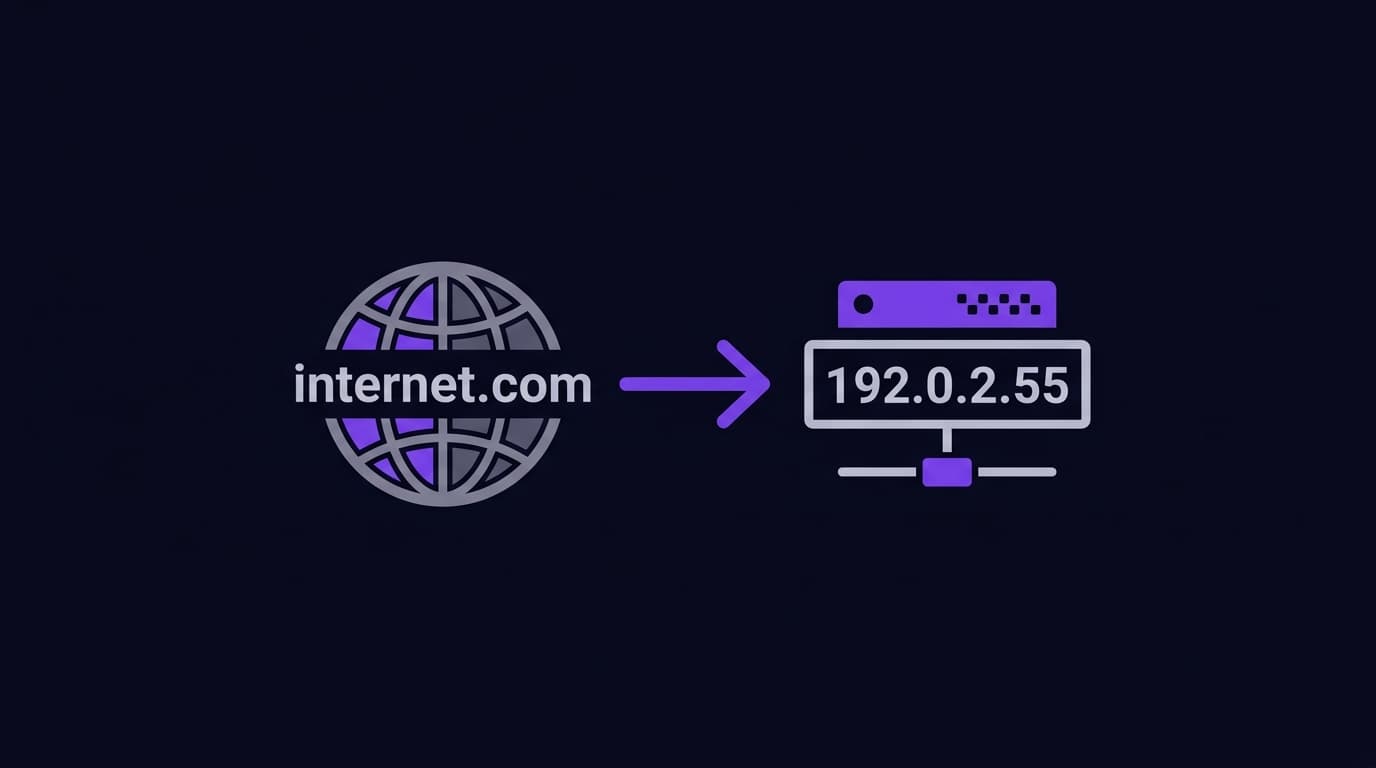
Every device connected to the internet has an IP address — a number like 93.184.216.34 (IPv4) or 2606:2800:220:1:248:1893:25c8:1946 (IPv6). When your browser wants to load a website, it ultimately connects to the server at an IP address.
IP addresses are unworkable for human use. They change when servers move. They are impossible to remember. And there is no meaning in a number — 93.184.216.34 tells you nothing about what you will find there.
Domain names solve both problems. They are human-readable, they stay stable even when the IP address changes (because DNS just needs updating, not all the links and bookmarks), and they carry meaning. example.com tells you it is example. That is the whole point.
How Do Domain Names Work?
When you type a domain name into a browser, several things happen immediately:
- Your browser checks its local DNS cache for a stored translation of that name to an IP address.
- If not cached, it asks your configured DNS resolver (your ISP, Cloudflare, or Google).
- The resolver queries the DNS hierarchy — root nameservers, then TLD nameservers, then the authoritative nameservers for that specific domain.
- The authoritative nameserver returns the IP address as specified in the A record.
- Your browser connects to that IP address and loads the website.
This entire process typically takes milliseconds. Domain names exist to make step 0 (typing the address) something humans can actually do. Everything else is DNS machinery.
What Are the Parts of a Domain Name?
A domain name has two required parts and one optional one.
Second-level domain (SLD): The name itself — the part you choose and register. In domain360.site, this is domain360. In bbc.co.uk, it is bbc.
Top-level domain (TLD): The extension after the final dot. .com, .org, .net are generic TLDs. .co.uk, .com.au are country-code TLDs. .io, .site, .app are newer generic TLDs. Our guide to TLD types and extensions covers these in detail.
Subdomain: Optional labels to the left, separated by dots. www.example.com has subdomain www. blog.example.com has subdomain blog. Subdomains are defined in DNS, not in the registration itself.
Registering vs Owning a Domain Name: What's the Difference?
This distinction matters enormously. You do not buy a domain name. You lease the right to use it.
Domain registration is a time-limited agreement between you and a registrar (like Namecheap or GoDaddy), and between the registrar and the relevant domain registry (for .com, that is Verisign). You pay for one to ten years of registration. To keep using the domain, you must renew it before it expires.
If you miss a renewal, there is a brief grace period where you can still renew at normal cost. After that, a redemption period where recovery costs significantly more. After that, the domain is deleted and released for anyone to register.
This is why domain expiry management is not optional — a domain you built a business on, an email system on, and a website on can be permanently lost if renewal fails. Independent tracking through a domain management dashboard that sends reminders at 60, 30, 14, and 7 days before expiry is the appropriate response to this risk.
Domain Name vs Web Hosting: What's the Difference?
These are two different things, often confused because many providers sell both. Our domain name vs web hosting guide covers the difference in full, but the short version:
A domain name is the address. Web hosting is the building at that address. You need both for a working website, but they are separate products with separate pricing, separate renewal cycles, and separate providers. It is common — and often recommended — to register your domain at a different company from your web host, for flexibility and independence.
What Is the Domain Name Market?
The global domain name registry for .com domains is managed by Verisign under an agreement with ICANN. There are around 175 million registered .com domains alone, plus hundreds of millions across other TLDs. The supply of short, desirable .com domain names is effectively exhausted for common words — which is why premium domain prices exist and why newer TLDs like .io and .site have found audiences. Our guide to premium domains covers when paying above-standard price is justified.
Quick Answers
Never lose a domain again
Track every domain you own in one dashboard. Free for up to 15 domains.